Sport's Crowded Calendar: Why Men's And Women's Sport Need Their Own Year
24 June 2026
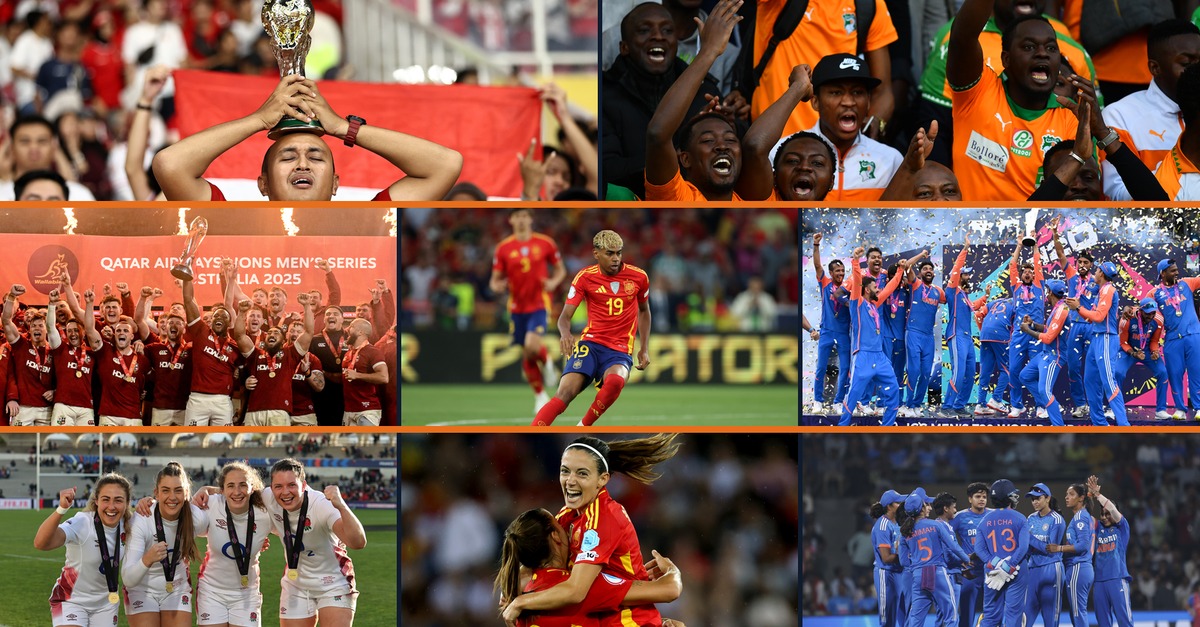
Take one Saturday in the UK this June. In the South East of England alone, you could have gone to the Premiership rugby final at Twickenham (81,000), Royal Ascot (60,000), or a Test match at The Oval (27,500). Three sell-out crowds, three sports, one afternoon, one corner of one country. Later that day, two hundred miles north, England beat Scotland in the Women’s T20 World Cup at Headingley in front of 11,419, a record crowd for a women’s match at the ground. Sport in the UK is widely followed, and fans turn out in large numbers for their teams, their country and the major events. Outside the UK on that same Saturday, the choice widened again to take in the US Open golf at Shinnecock Hills and the biggest draw of them all, the football World Cup rolling through North and Central America. There was a record-breaker too: 15-year-old Vaibhav Sooryavanshi, who hit the fastest fifty in List A cricket history in Sri Lanka.
Only a die-hard could watch all of that. For the rest, it is an almost impossible challenge. Sport is now a buffet laid out wider than most can eat, and the trouble is not only that everything competes for the same hours, screens and back pages. It competes for the attention of a finite audience.
Sports fans are not limitless, and the administrators are asking too much of a loyal and committed crowd. So can we stop making fans choose, and let them have the lot?
The Calendar Has No Off Switch
Sport used to take turns. The seasons handed off to one another, with a few quiet weeks in between when nobody minded. That rhythm has gone. This June, the UK sports fan is awash with choice, but so are fans across the globe. In the States, the New York Knicks won their first NBA title in 53 years. The Stanley Cup finals closed the hockey season. Baseball is mid-summer, the WNBA is underway, in Australia, the AFL and NRL command most of the nation’s attention and worldwide, Formula One and MotoGP are in full swing, and back home, beneath the England v New Zealand Test Matches and the T20 World Cup, the County Championship pulls the traditional cricket supporter differently again.
Most of it is coordinated until a major international event lands. Every league and broadcaster builds windows for its annual fixtures that maximise its inventory. The trouble comes when you drop a global tournament on top. This year, there were two: the men’s football World Cup and the Women’s T20 World Cup. In the United States, the leagues and broadcasters made room. The NBA deliberately rearranged this year’s Finals to avoid clashing with a World Cup match, scheduling no Sunday game for the first time since 1970. That is not happening elsewhere. But if the major sports worked together on a long-term calendar, they could protect each other’s audiences, grow the overall pool, and carry a loyal fan across many more sports. That would please the existing fans while letting new ones sample as much as possible. That is not a sacrifice. It is common sense, and it is the template we would support.
The Maths Of A Finite Audience
Study the television figures, the cable subscriptions and the like, and it is safe to assume that around a quarter of the country follows sport with any regularity, rising to perhaps a third for a genuinely special event. India is the outlier because cricket there is close to a religion, and the numbers are extraordinary. Elsewhere, the pattern holds. The Lionesses’ Euro final in 2022 peaked at roughly 17 million in the UK, the most-watched programme of the year, while the men’s Euro final the year before topped 30 million across two channels. The weekly Premier League audience, by contrast, reaches about 15 per cent of the population. In the United States, the Super Bowl draws around 125 million, yet the regular-season NFL averages closer to 20 million. At the Sydney Olympics, 45 per cent of Australians watched Cathy Freeman win the 400m gold, while about 15 per cent watch State of Origin each year. A handful of marquee moments command enormous, once-a-year audiences. Everything beneath them shares a far smaller, finite pool of attention, and that pool does not grow just because the supply does. It is the one thing in the system that has not scaled.
Multi-screens have helped. A committed fan can have the cricket on the main screen, the racing on a tablet or phone, switch over for the rugby in the afternoon, then come back for the evening match with a football tie running alongside it. Sports fans love sport, all of it, and given the chance, they will happily consume far more than the old one-event-at-a-time model assumed. The ceiling on attention is real, but people are nowhere near as quick to choose between sports as schedulers seem to think they are. Given the option, they would rather find a way to watch as much of it as they can.

Who Loses When Everything Competes
When attention is scarce, the biggest beasts are fine. The men’s football World Cup is the behemoth this year, leaving everything else to be heard underneath it. Controversy and celebrity make the imbalance worse because both travel faster than the narrative of a tournament itself.
English cricket proved it. The Stokes and Atkinson nightclub incident, their ban, and the Test defeat to New Zealand that followed dominated the sports headlines, the controversy travelling beyond cricket. Serena Williams accepting a Wimbledon singles wildcard at 44, and Lewis Hamilton taking his first Grand Prix win for Ferrari in Barcelona, led the back pages without a crowded market’s permission. In a packed field, the events that win attention are the loudest, or carry the biggest names, not always the ones that earn it on merit. Alongside all of that sat the Women’s T20 World Cup. In a congested window, fighting for room against the bigger events, it was still setting records.
In the UK, the opening England v Sri Lanka fixture drew a Sky Sports average of 393,000, peaking at 510,000, the highest the broadcaster has recorded for a single match at the tournament. The opening weekend ran to 3.3 million viewer hours on Sky, the most for the start of any ICC women’s short-form event. A record 44,844 spectators came through the gates in Birmingham, Manchester and Southampton over the first three days, and India v Pakistan at Edgbaston was a sell-out, the best-attended group-stage fixture in the history of ICC women’s world events.
The digital numbers are on another scale. On JioHotstar in India, the opening weekend reached 215 million viewers and 1.3 billion minutes of live watch time. India v Pakistan pulled 134 million unique digital viewers, with live concurrent viewing past 25 million, and beat the entire digital footprint of the 2024 edition in a single match. Official ICC social content gathered 753 million video views in three days, more than doubling the last cycle. The Women’s T20 World Cup is not a niche product hoping to be noticed. It has a mass audience, active and commercially valuable, but it is built in a window that works against it.
Clearly, the audience sits in the subcontinent. In the UK, it is fighting for column inches, and not because the audience is absent. It is because too much else is happening, pulling fans away from an excellent product. Home interest matters if you want full stadiums and a spectacle worth broadcasting, especially once the home side is knocked out. Darcey Carter, Danni Wyatt-Hodge and Smriti Mandhana deserve their names in the spotlight at this year’s tournament, not a fight for attention against Stokes, Atkinson, Bellingham, Messi and Mbappé. A clean window would give them that.
The tournament is not failing for want of an audience. It is being held below its ceiling by its place in the calendar, run alongside men’s Tests, the football World Cup, peak domestic rugby and a golf major. It is only natural that broadcasters, sponsors and editors split their attention. Front pages, studio talent, marketing spend, and push notifications are all divided. Despite this, records have been broken anyway. So what would happen if the division is removed?
Trying To Fit Too Much Through One Window
The clashes are not bad luck. They have been placed in this window. The northern hemisphere summer suits almost everything: long daylight, dry weather, and the gap between football seasons. It is the only space a major international football tournament can occupy. So the World Cup and the Euros plant themselves there, and the fixed furniture of the calendar, Royal Ascot, Wimbledon, the Tour de France and the Open at Royal Birkdale in mid-July have all sat in the same window for generations. New events pile on top of the old. Add just one more major tournament, and June and July become the busiest sporting months of the year, with no room to squeeze anything else in.
The Olympics and Paralympics escape it. The Summer Games claim late July and August precisely because they are big enough to bend the calendar to themselves and demand clear air. English cricket cannot, because August has been swallowed by The Hundred, the ECB’s flagship competition, which runs from 21 July to 16 August in a protected window with full player availability and men’s and women’s sides in double-headers. It has done well. So this year’s Women’s T20 World Cup had no choice but to be played between 12 June and 5 July. Without The Hundred, August would have been an excellent option, but the commercial priority of the domestic tournament outweighed a women’s world event. Dare we say that had it been a men’s event, the Hundred might have moved?

Give Men’s And Women’s Sport Their Own Year
This is where we will plant our flag. Covering male and female sport equally is a founding pillar of This Sporting Planet, and our own data says it works: when we cover women’s sport, our audience holds, and close to 30 per cent of that audience is female, well above the norm for sports podcasts. The appetite is real. The problem is not interest. It is timing.
Women’s sport gets the most attention when it claims its own window, and the precedent is already proven. The women’s Six Nations runs after the men’s, in clear air, and is stronger for it. UEFA went further. When the Women’s Euros were moved out of the shadow of the men’s international cycle, the 2022 edition reached a cumulative 365 million worldwide, more than double the previous tournament, and became the defining sporting story of its summer. It breathed because nothing elite was competing for the same eyes. The T20 numbers say women’s cricket has the same standalone potential. It is currently spending that potential on a fight it should never have been asked to have.
So here is the idea worth taking seriously. Build the calendar around clear windows, and let the big events have a year of their own. 2027 is already the standout year for women’s sport, with the football World Cup and the first Women’s British and Irish Lions tour to New Zealand. Move the Women’s T20 World Cup into May or June of that year, and the events stop competing and start compounding. Each one carries an audience into the next. A summer of women’s sport, near enough a festival, big enough to stand on its own, instead of three good things scattered across years and buried under bigger ones.
2027 is an Ashes year too, with Australia touring for the men’s five-Test series and a women’s multi-format series alongside it, so a World T20 Tournament would not have the summer to itself. But the Ashes tend to start in mid-June, so May to mid-June would have made the T20 World Cup an excellent precursor. Cricket fans would have loved it. Even the rivalry would be a cricket story, and the women’s Ashes would build the same audience rather than split it. That is the better trade. And it costs the domestic game nothing. The Hundred keeps its August window untouched, county cricket runs as it does, and player availability is unaffected. The lever here is the year an international event is placed in, not a reshuffling of everyone else’s season.
The principle is simple. Give the big events alternating years, women’s years and men’s years, on a rota that everyone can plan around. Nobody needs the exact dates to know that 2027 is a women’s year, or that 2030 and 2034 are men’s World Cup years. 2030 already points the way: the home nations host the men’s T20 World Cup that June, in the same year as the football World Cup, proof that a year can carry more than one major event by design. You could imagine pulling the 2029 Lions tour into 2030 to round out a men’s festival, but it is locked into the newly built Rugby Nations Championship window, which is exactly the point. Festivals only happen if planning starts years out and spans governing bodies, around fixtures already committed.
2034 is the chance to show it working. Everyone will know it as a men’s World Cup year, wherever and whenever FIFA finally stages it. If the football moves out of the northern summer, that window opens up, and the men’s game could place a tournament there by design, a T20 World Cup in the United States, say, building on the bridgehead the 2024 and 2026 events created. Choose the year with intent, and group the events that belong together so they build something instead of cancelling each other out. The Olympics and Paralympics already do a version of this, claiming clear air every four years because they are large enough to demand it, and the Games sit outside the argument anyway, open to every sport and both sexes at once. Nobody is asking for an empty calendar or for the men’s game to step aside. The ask is smaller and more useful. It is the difference between high volume and high impact. Give an event a clean window, and it stops fighting for a share of a distracted audience. It has the room to become the story.
The Virtuous Circle Of Fandom
This is a golden age, men and women offering top-level international sport, separately and together. It is a wonderful time to be a fan, with events available anywhere, at any hour. But the marketplace is relatively small, which makes the one catch self-inflicted. The best events are piled on top of one another, each in its own bubble, celebrating its own metrics and asking the fan to choose between them. Step back, and the fan would happily take the lot. So let us make that happen, and lift every sport in the process.
One of the quiet joys of the Olympics and Paralympics is watching men and women compete on the same stage, in the same fortnight, for the same attention. That used to be the exception, and a permanent version of it is not realistic. But today, women are excelling in sports that were once considered men’s for a century, drawing crowds, viewership, and commercial interest to prove it. It is one of the good stories of this century, and despite the naysayers, the direction is set. Women’s sport is gathering pace and building a following, and the one thing it needs to keep doing so is room to be seen. The men’s game will benefit from it too.
Return to that finite pool of attention. Roughly a quarter of the country follows sport, and the truth is that most of that quarter is likely to be male, which is exactly why women’s sport matters to everyone, not only to women’s sport. It is the largest available source of new fans, people coming to sport for the first time, rather than being shuffled between events that already have them. And fandom rarely stays in one lane. Someone who arrives through the Women’s T20 World Cup or a home Euros tends to start watching the men’s game too, and vice versa. The pool that has not scaled in half a century finally has room to grow. That is the virtuous circle. Women’s sport widens the base, the base lifts everything built on it, and everyone benefits.
There is no tidy fix for the abundance itself, and we are not going to pretend otherwise. But the lesson from a June like this one is clear. The product is excellent. The audience is already there, and a bigger one is waiting. What the calendar needs is people willing to sit around a table and act on it, to look at a tournament breaking records in the wrong window and decide it deserves the right one. Give the big events their own year, men’s and women’s, and they stop cannibalising each other. Sports fans love sport, all of it, so let them follow the major events without picking and choosing, and let the sports that have earned their moment finally have it. Scheduled for, not hoped for.